
From The Pulpit
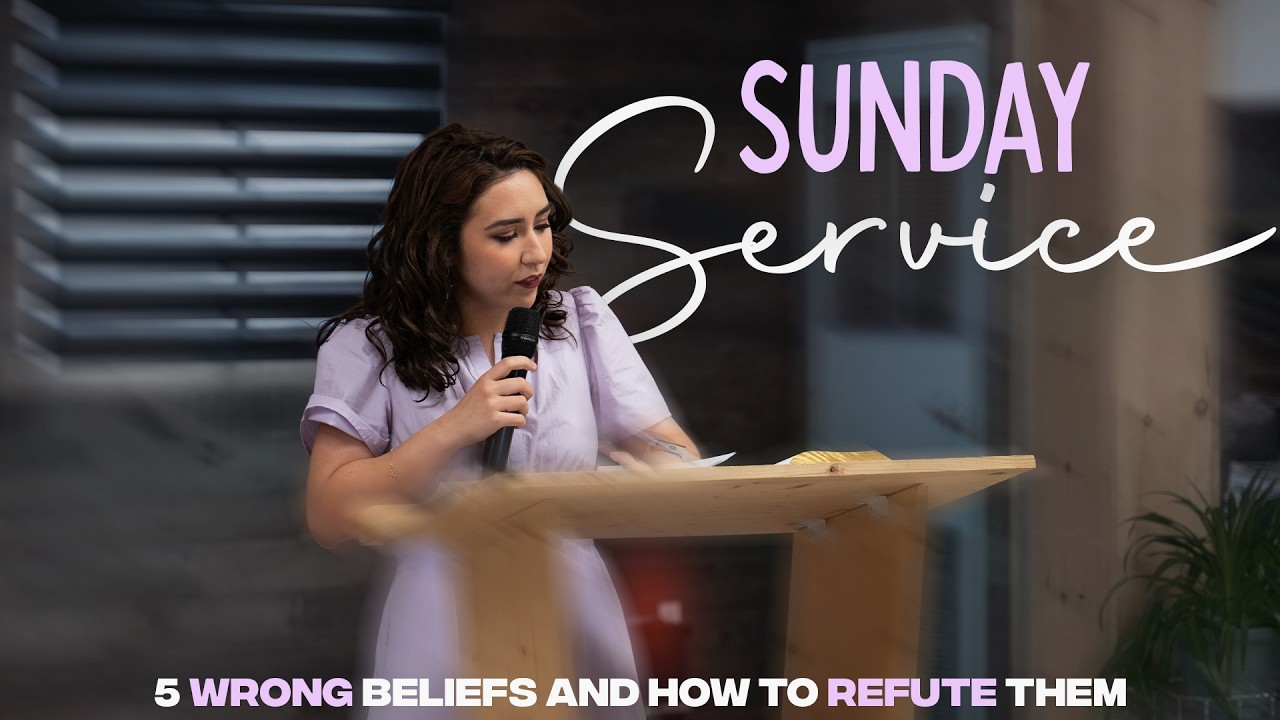
5 Wrong Beliefs and How to Refute Them
"Any deficiency we have is a deficiency of God's word."
On a Sunday morning when the room had grown to ninety-five and the air carried that early-summer expectancy, Pastor Tiffany Daniels opened her Bible and warned the congregation about beliefs that quietly steal a Christian’s life. The sermon was titled “5 Wrong Beliefs and How to Refute Them,” and she set the stakes plainly: in the last days, the apostle Paul wrote, some will depart from the faith because they pay attention to deceitful spirits and doctrines of demons. The remedy, she taught, is not fear — it is the Word.
“Any deficiency we have is a deficiency of God’s word.”
The Word is the test
Before naming a single wrong belief, Pastor Tiffany pressed the congregation to get “obsessed” with Scripture. John 1:1 was her starting point: in the beginning was the Word, the Word was with God, and the Word was God. To read the Bible, she taught, is to read God Himself — His personality, His covenant promises, His way of operating. Faith, she reminded the room, is the difference-maker. Jesus’ standing question to those who came to Him for healing was always the same — Do you believe that I am able to do this? — and His answer was always the same: According to your faith, be it done unto you.
She also showed why correcting wrong belief is itself a Jesus-shaped pastoral act. Walking through Matthew 5, she pointed to Jesus contradicting one received teaching after another — You have heard it said… but I tell you. Naming the lie out loud, she said, is part of the work.
Wrong Belief #1 — “God picks and chooses who He saves”
The first wrong belief, Pastor Tiffany said, is that God selects a favoured few for salvation and leaves everyone else to perish. She refuted it with one passage after another. From 2 Peter:
The Lord does not delay his promise as some understand delay. But he is patient with you, not wanting any to perish, but everyone to come to repentance. — 2 Peter 3:9 (CSB)
She walked through John 3:16 — God so loved the world, not a few select people — and reminded the room that John 3:17 adds that Jesus did not come to condemn the world but to save it. Romans 10:13 was next: whoever calls upon the name of the Lord shall be saved. The thief on the cross, she pointed out, simply asked Jesus to remember him, and that was enough. Romans 6:23 framed it as a gift: the wages of sin is death, but eternal life is given freely in Christ Jesus.
She closed the section in 1 Timothy 2, where Paul urges prayer for everyone, including kings and rulers, because God “wants everyone to be saved and to come to the knowledge of the truth.” There is one God, she emphasized, and one mediator between God and humanity — the man Christ Jesus. The door is wide; the way is narrow but specific.
“Whoever calls upon the name of the Lord shall be saved. Whoever means whoever means whoever.”
Wrong Belief #2 — “God picks and chooses who He heals”
The second wrong belief, she said, runs along the same line. God does not select a few to be healed and leave the rest to suffer. Isaiah saw it seven hundred years before the cross:
Yet he himself bore our sicknesses, and he carried our pains; but we in turn regarded him stricken, struck down by God, and afflicted. But he was pierced because of our rebellion, crushed because of our iniquities; punishment for our peace was on him, and we are healed by his wounds. — Isaiah 53:4-5 (CSB)
If Jesus already bore the sickness, Pastor Tiffany taught, the believer does not have to bear it too. She drew it out with a shopping-cart picture: if a friend has already paid at the till, you don’t pay a second time — you push back. Healing belongs to the believer because the price has been settled.
She moved to Psalm 103, a passage she reads often before service:
Bless the Lord, oh my soul, and do not forget all his benefits. He forgives all your sins. He heals all your diseases. — Psalm 103:2-3 (paraphrased)
Healing, she taught, is not a bonus add-on. It is one of the listed benefits of the covenant. Acts 10:38 sealed it:
God anointed Jesus of Nazareth with the Holy Ghost and power, who went about doing good and healing all that were oppressed by the devil, for God was with him. — Acts 10:38 (paraphrased)
From there she walked through Mark 1, where the whole town gathered at the door and Jesus healed them, and Matthew 9, where Jairus asked for his daughter, the woman with the issue of blood reached for Jesus’ robe, and two blind men called out for mercy. Each healing, she observed, hinged on a confession of faith — if you lay your hands on her, she will live; if I just touch his robe, I’ll be made well; yes, Lord, we believe.
“Everywhere Jesus went, people were healed.”
She also reminded the church that the believer is no longer under the curse but under the blessing of Abraham — and that 2 Corinthians 10:5 tells us to take every thought captive and make it obey Christ, including thoughts of sickness and generational curse.
The room becomes a healing service
What followed was less a teaching block than a Jesus-style healing meeting. Pastor Tiffany commanded sickness to leave bodies in Jesus’ name, prayed individually over a woman who came forward, and urged the congregation to “jump in the river” of God’s presence rather than watch from the bank. She paused the message only long enough to issue an altar call — God wants everyone saved, she repeated — and several came forward to give their lives to Christ. The service then closed in communion, with the bread and the cup framed as the full payment of every debt and every sickness on the cross.
A word to take with you
The sermon was titled 5 Wrong Beliefs, but the Spirit only allowed Pastor Tiffany to walk through the first two before the room turned into ministry, salvation, and communion. The remaining three were planned for a follow-up message a week later. What the church received instead was the whole point of the series in microcosm: when the Word is preached and faith rises, Jesus shows up to do exactly what His Word says He will do.
If you are weighing a belief about God today, weigh it against Scripture. He is not stingy with salvation. He is not stingy with healing. He plainly told us how He feels — and according to your faith, He still says, be it done unto you.